
Automotive Technology
Explore Toolkit’s solutions for Automotive Technology Training Systems for modern automotive classrooms.
The ever-increasing quantity of technologies found in modern vehicles, combined with the ever-increasing complexity of electronic systems and state-of-the-art technologies such as Advanced Driver Assistance Systems (ADAS), Smart Sensors, Autonomous Driving systems, Interconnected Systems, Computerized Diagnostic and Scan Tools, Plug-In Electric Vehicle and Hybrid technologies, etc. creates an increased need for automotive training to be done with modern, state-of-the-art technologies and training systems.
Modern Automotive Training Labs should keep pace with modern automotive vehicles on the road.
Automotive service technicians and mechanics can be expected to:
- Identify problems, often by using computerized diagnostic equipment
- Plan work procedures, using charts, technical manuals, and experience
- Test parts and systems to ensure that they work properly
- Follow checklists to ensure that all critical parts are examined
- Perform basic care and maintenance, including changing oil, checking fluid levels, and rotating tires
- Repair or replace worn parts, such as brake pads, wheel bearings, and sensors
- Perform repairs to manufacturer and customer specifications
- Explain automotive problems and repairs to clients
Although service technicians work on traditional mechanical systems, such as engines, transmissions, and drivebelts, they also must be familiar with a growing number of electronic systems. Braking, transmission, and steering systems, for example, are controlled primarily by computers and electronic components.
Other integrated electronic systems, such as accident-avoidance sensors, are becoming common as well. In addition, a growing number of technicians are required to work on vehicles that use electricity or alternative fuels, such as ethanol.
Service technicians use many different tools, including computerized diagnostic tools and power tools such as pneumatic wrenches, lathes, welding torches, and jacks and hoists, in addition to common hand tools like wrenches, pliers, and sockets.
Whether for transportation and logistics classrooms, agriculture and mechanics or manufacturing classrooms, Toolkit has the Automotive Service Technology Training Systems and ASE Certification-aligned solutions to fit your area’s industry training needs.
Job Outlook: 69,000 new jobs per year
Average Pay: $46,890
Shop by ASE Category
Showing 1–12 of 135 results
-
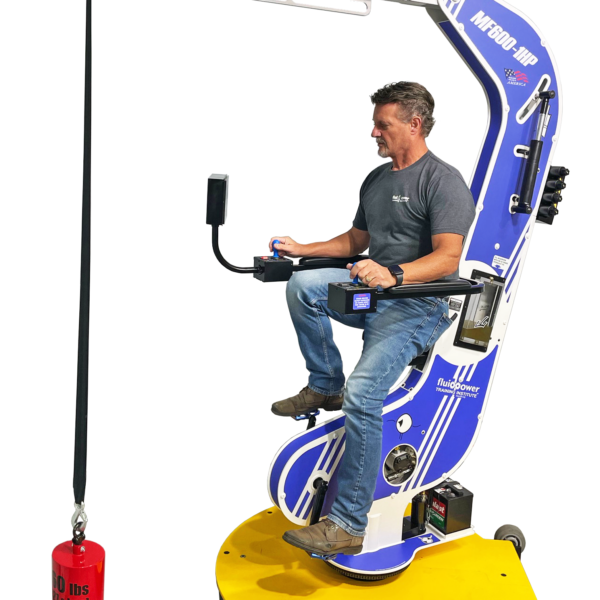
FPTI (1-HumanPower™) Basic Hydraulics Training System
The MF600-1HP (1-HumanPower™) Basic Hydraulics Training System is a zero-emissions, human-powered learning platform that teaches fundamental hydraulics in the most intuitive way possible. By using the student as the prime mover, the system allows learners to feel how changes in flow, pressure, torque, and horsepower directly affect actuator behavior. Pedaling speed becomes flow. Pedaling force becomes pressure. These real-time cause-and-effect relationships make abstract concepts instantly understandable.
A back-lit crane assembly with boom, mast rotation, and hydraulic winch enables learners to see pressure, area, load, torque, and speed interactions in a clear and visual format. With digital instrumentation and a complete set of industrial hydraulic components, the MF600-1HP provides one of the most engaging and memorable introductions to hydraulic science, perfect for high schools, technical colleges, workforce development, and entry-level industry training programs.
-
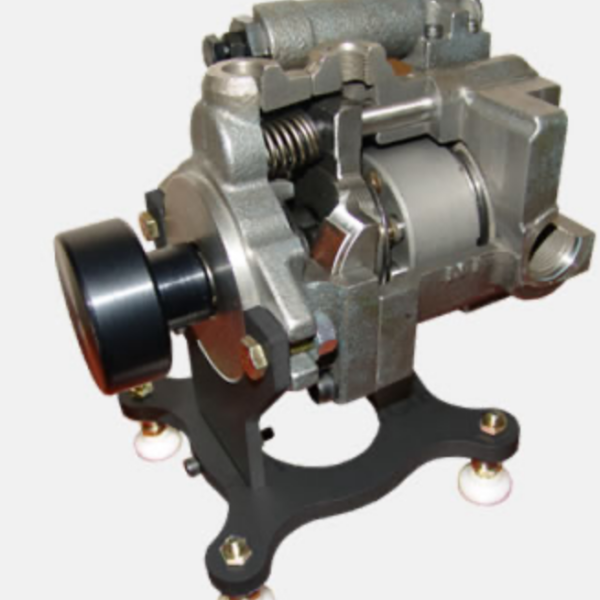
FPTI Axial Piston, Variable Volume, Pressure-Compensated Pump Cutaway
This model exposes the inner workings of a pressure-compensated axial piston pump—including the pump housing, pistons, and complete pressure compensator section. By rotating the pump manually, students see how displacement changes occur and how the compensator manages system pressure. Perfect for illustrating the relationship between pressure control, displacement, and efficiency.
Strategic cutaway sections provide clear visibility into how the compensator interacts with the swashplate to regulate output based on system demand. As the pump is cycled, learners can observe how pressure signals influence displacement adjustments, reinforcing key concepts in energy efficiency and system optimization. Mounted on a durable base for consistent classroom use, this model supports hands-on exploration and deeper understanding of pressure-compensated pump operation.
A hands-on training model that clearly demonstrates how pressure compensation controls pump output and system efficiency.
-
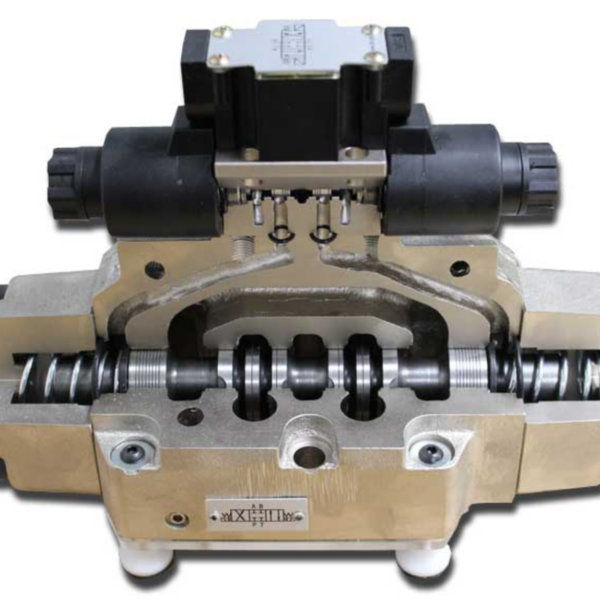
FPTI D08 Directional Control Valve Cutaway
This two-stage valve cutaway reveals internal flow paths, spool movement, and the pilot-stage architecture in a way that is impossible to see in real equipment. Students gain a clear understanding of how pilot pressure shifts the spool and how the valve can be configured for internal or external pilot operation. Ideal for troubleshooting and advanced valve instruction.
Strategic cutaway sections highlight the interaction between the pilot stage and main stage, allowing learners to follow pressure signals and see how small pilot inputs control larger flow paths. As the valve is examined, users can better understand response time, pressure balance, and the role of pilot circuits in achieving precise control. Built on a durable base for repeated classroom use, this model supports hands-on learning and in-depth system analysis.
An advanced training model that clearly demonstrates pilot-operated valve control and internal hydraulic communication.
-
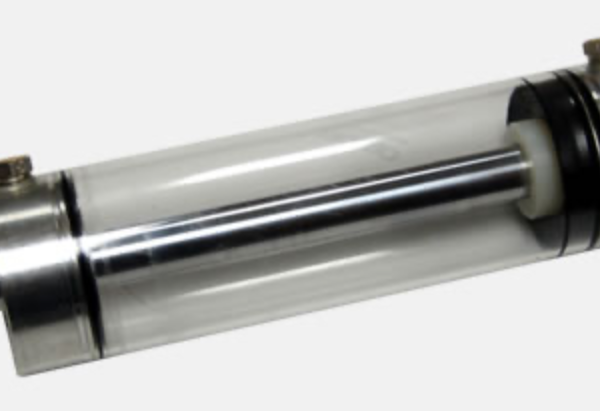
FPTI Double-Acting Single-Rod Cylinder Cutaway
With a clear acrylic cylinder barrel, this model exposes the piston, rod, and sealed chamber areas so students can see how a cylinder creates force and motion. Breathers on the ports allow smooth manual movement, making it easy to demonstrate extension, retraction, and area-based force differences. A perfect introductory cylinder teaching tool.
The transparent design gives learners a direct view of how fluid displacement translates into linear motion, helping reinforce concepts like pressure vs. area and force generation on each side of the piston. As the rod is moved, students can clearly observe how volume changes affect speed and force during extension and retraction. Built for durability and repeated classroom use, this model supports hands-on learning and foundational understanding of hydraulic cylinder operation.
A clear, interactive model that makes the fundamentals of hydraulic cylinder motion and force easy to see and understand.
-
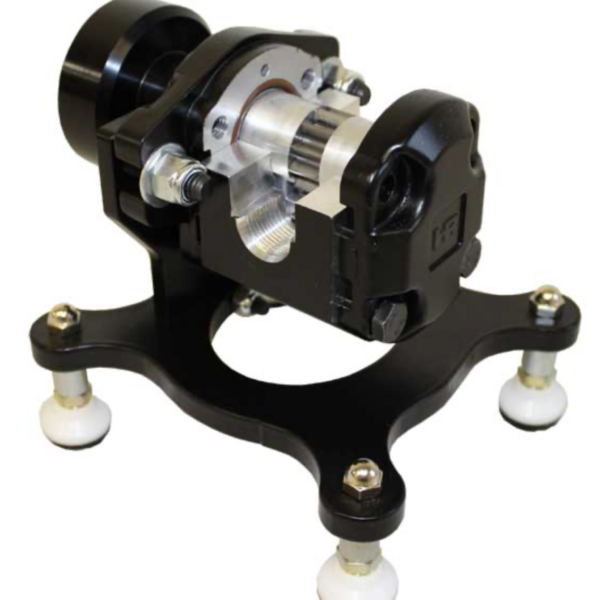
FPTI External Gear Pump Cutaway
This cutaway vividly demonstrates the simplicity and reliability of an external gear pump. Students can rotate the shaft to watch the gears mesh and unmesh while observing how oil is carried around the housing. It’s an excellent teaching tool for introducing gear pump operation, volumetric efficiency, and wear patterns.
The open cutaway design provides a clear view of fluid movement between the gear teeth and housing, helping learners understand how flow is generated and where inefficiencies can occur. As the pump is manually rotated, users can see how clearances, sealing surfaces, and gear engagement impact performance and internal leakage. Mounted on a durable base for stability, this model is built for repeated classroom use and hands-on demonstrations.
A simple, hands-on training model that clearly illustrates the fundamentals of external gear pump operation and performance.
-
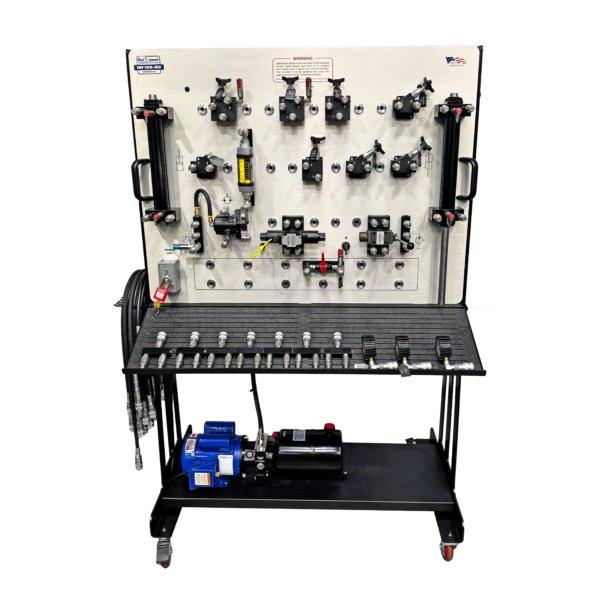
FPTI Hydraulic Basics Training System
MF100-BH Hydraulic Training System
The MF100-BH Hydraulic Training System is an affordable, modular, and highly flexible entry point into hands-on hydraulic training. Built on a lightweight, durable platform, the MF100-BH gives instructors a simple and scalable way to teach fluid power fundamentals using real industrial components. Its plug-and-play mounting system, onboard storage, and compact rolling frame make it ideal for classrooms, mobile labs, and technical skill development programs that need a practical and budget-friendly solution.
Whether used as a single learning station or expanded with additional components, the MF100-BH grows with your curriculum, supporting everything from introductory hydraulic circuits to more advanced system behavior analysis. Designed for maximum teaching flexibility, it delivers a clean, intuitive layout that helps learners quickly understand hydraulic principles while giving instructors a reliable, portable, and easy-to-configure training platform.
-
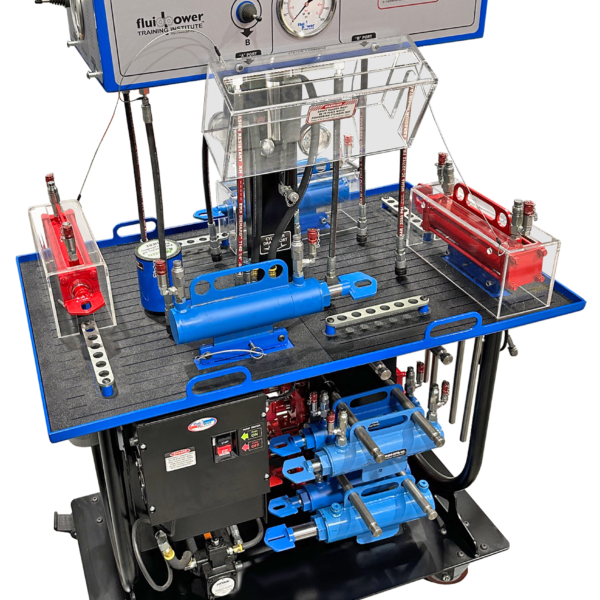
FPTI Hydraulic Cylinder Training Simulator
The MF400-HCTS Hydraulic Cylinder Training Simulator is a complete hands-on system designed to teach safe, industry-correct hydraulic cylinder service procedures. Students learn how to overhaul, inspect, reseal, test, and air-bleed hydraulic cylinders using real components, specialized fixtures, and clear safety covers, all mounted on a rugged, mobile four-station platform. This simulator eliminates the risks normally associated with live hydraulic service while giving learners the exact skills technicians need in real industrial, mobile equipment, and maintenance environments.
-
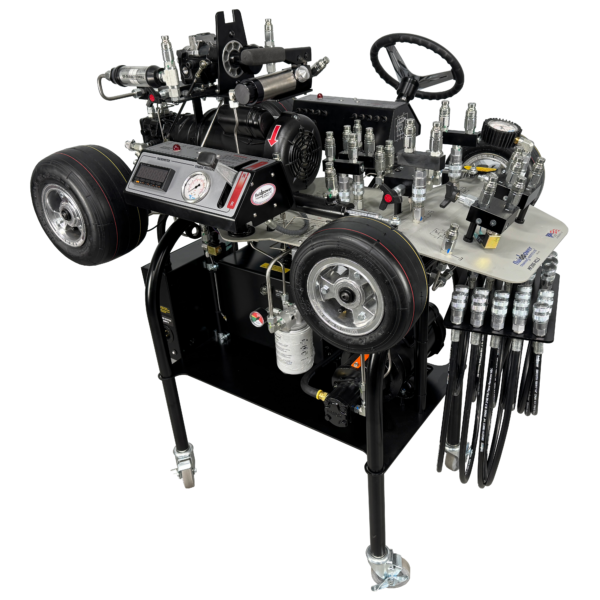
FPTI Hydrostatic Transmission and Hydraulic Steering Training Simulator
The MF300-VCLS is a premium 2-in-1 hydraulic training simulator that teaches two major mobile-equipment systems in one platform: hydrostatic transmission and hydraulic steering. The rear section features a complete, functioning hydrostatic drive identical to those used in skid-steer loaders and industrial machinery. The front section houses a fully functional hydraulic steering system modeled after articulated loaders and other mobile equipment. This system allows learners to see, in real time, how overcenter pumps, flow direction changes, orbitrol steering valves, cross-port relief valves, and steering cylinders work together.
The MF300-VCLS is built specifically for education, solving safety, accessibility, and liability challenges that prevent schools from using full machines for training. With dual overcenter pumps (one functional, one cutaway), dual bi-directional flow meters, a waist-high layout, and optional electronic troubleshooting, the MF300-VCLS creates unmatched clarity in teaching how mobile hydraulic systems behave. It is ideal for technical programs, industrial training centers, and workforce development academies looking for real-world hydraulic system instruction without needing access to full-size equipment.
-
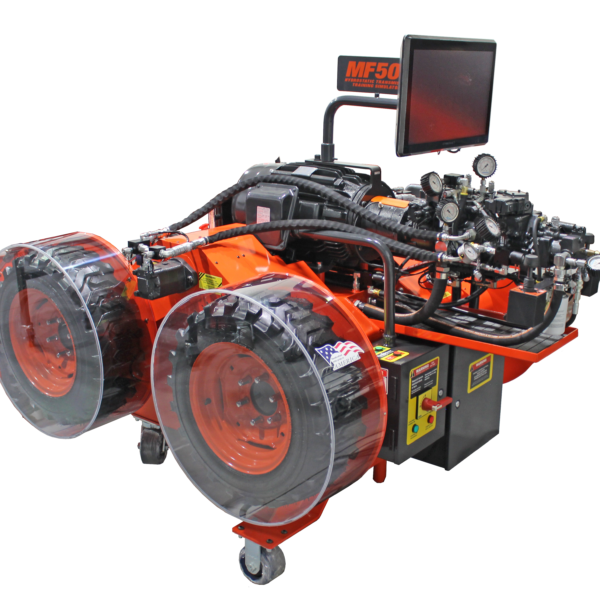
FPTI Hydrostatic Transmission Training Simulator
The MF500-HT-TSE Hydrostatic Transmission Training Simulator is the industry’s most advanced, safest, and instructionally powerful alternative to teaching hydrostatic drives using real skid-steer loaders. Designed specifically for education—not construction environments—it recreates the look, feel, and function of a skid-steer hydrostatic transmission without the hazards of moving machinery, exhaust, confined spaces, or unpredictable equipment motion. Students can drive the system under load in real time, perform adjustments, practice diagnostics, and troubleshoot every major hydrostatic failure mode published in manufacturer flowcharts.
With dual tandem-mount axial piston pumps, electronic displacement controls, independent wheel-load systems, and a 24″ touchscreen PC loaded with diagnostic activities, the MF500-HT-TSE gives instructors full control over operating conditions and fault scenarios. This setup prepares technicians for the exact challenges they’ll encounter in the field—startup checks, pressure adjustments, null adjustments, case pressure verification, and troubleshooting performance issues—while ensuring the highest levels of safety, accessibility, and team-based learning.
-
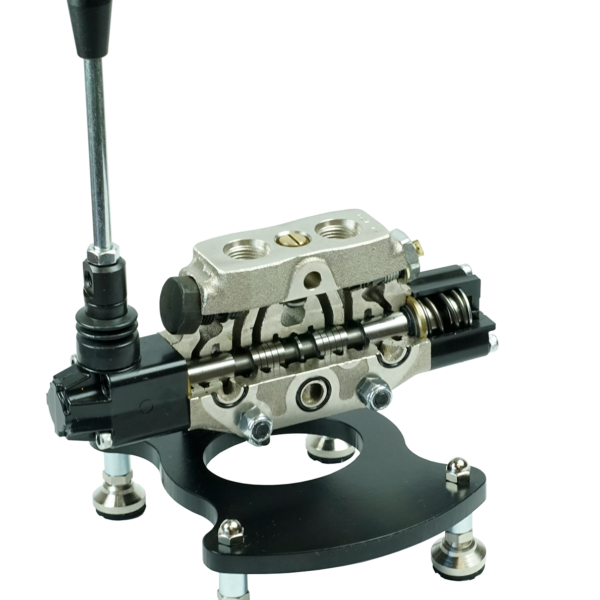
FPTI Mobile Directional Control Valve Cutaway
This mobile valve cutaway exposes key internal components—including the spool, load check valve, cylinder port relief valves, and anti-cavitation valves. Students can observe flow paths and understand how mobile valves manage load holding, meter-out control, and thermal relief. A powerful tool for connecting schematic symbols to real hardware.
Mounted on a durable base for stability and repeated classroom use, the unit is designed to give learners clear, hands-on visibility into real-world hydraulic operation. The manual actuation lever allows users to physically control flow direction, reinforcing concepts like pressure regulation, flow control, and system response under load. Ideal for advanced fluid power training, this cutaway bridges the gap between theory and application while supporting interactive demonstrations and instructor-led walkthroughs.
A hands-on training solution that brings mobile hydraulic valve operation to life through real, observable components.
-
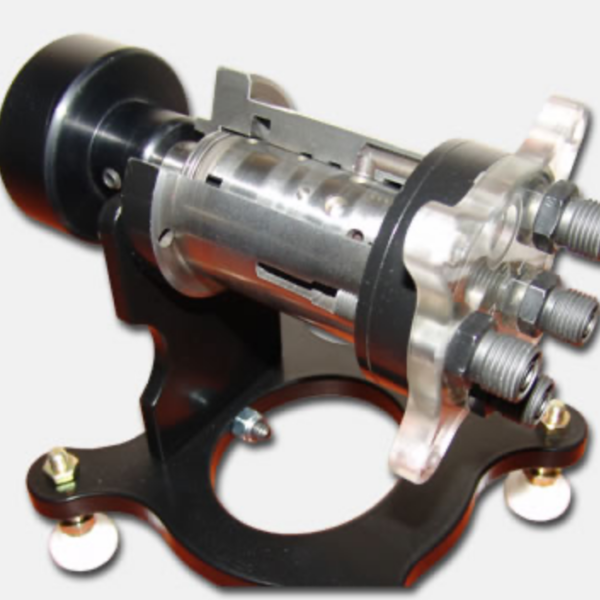
FPTI Orbital Steering Valve Cutaway
This orbital cutaway exposes the metering section, spool-and-sleeve assembly, and centering springs, giving students a complete visualization of how hydraulic steering systems function. By examining internal metering elements, learners gain practical insight into steering flow, manual metering, and the mechanics of articulated vehicle steering systems.
The detailed cutaway allows users to trace fluid flow through the unit, showing how input from the steering wheel is translated into controlled hydraulic output. As the unit is examined, students can better understand how the spool and sleeve interact to meter flow and how centering springs return the system to neutral. Built on a durable base for repeated classroom use, this model supports hands-on learning and a deeper understanding of real-world steering system operation.
A hands-on training model that clearly demonstrates the internal operation of hydraulic steering (orbital) systems.
-
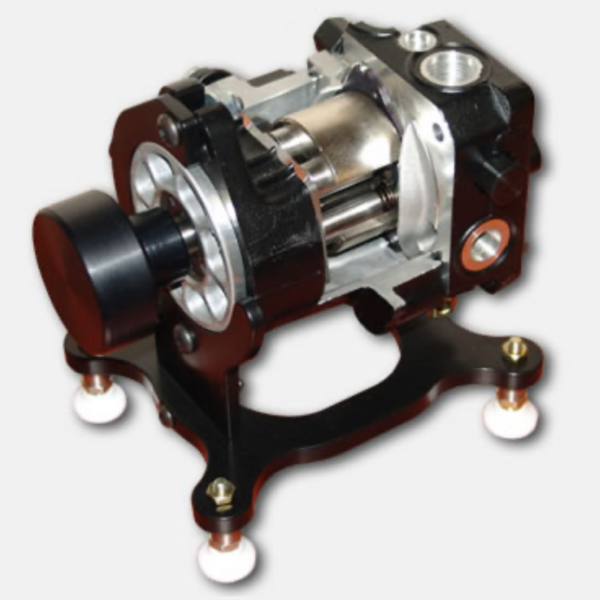
FPTI Over-Center, Axial Piston, Variable Displacement Pump Cutaway
This cutaway gives learners a complete internal view of an over-center axial piston pump, including the swashplate, pistons, pressure relief valve, and charge pump assembly. With multiple strategic cutaways and a manual rotation knob, students can visualize displacement changes and internal oil paths as the pump cycles. Ideal for teaching pump control, pressure compensation, and charge circuit operation.
The manual rotation feature allows users to physically cycle the pump, making it easier to see how piston movement, swashplate angle, and fluid flow interact in real time. Clear cutaway sections highlight key components and flow paths, helping students connect theoretical concepts to actual mechanical operation. Mounted on a stable base for durability and repeated classroom use, this unit supports hands-on demonstrations and deeper understanding of variable displacement pump behavior.
A dynamic training tool that brings axial piston pump operation into clear, hands-on focus.