





Description
MF500-HT-TSE
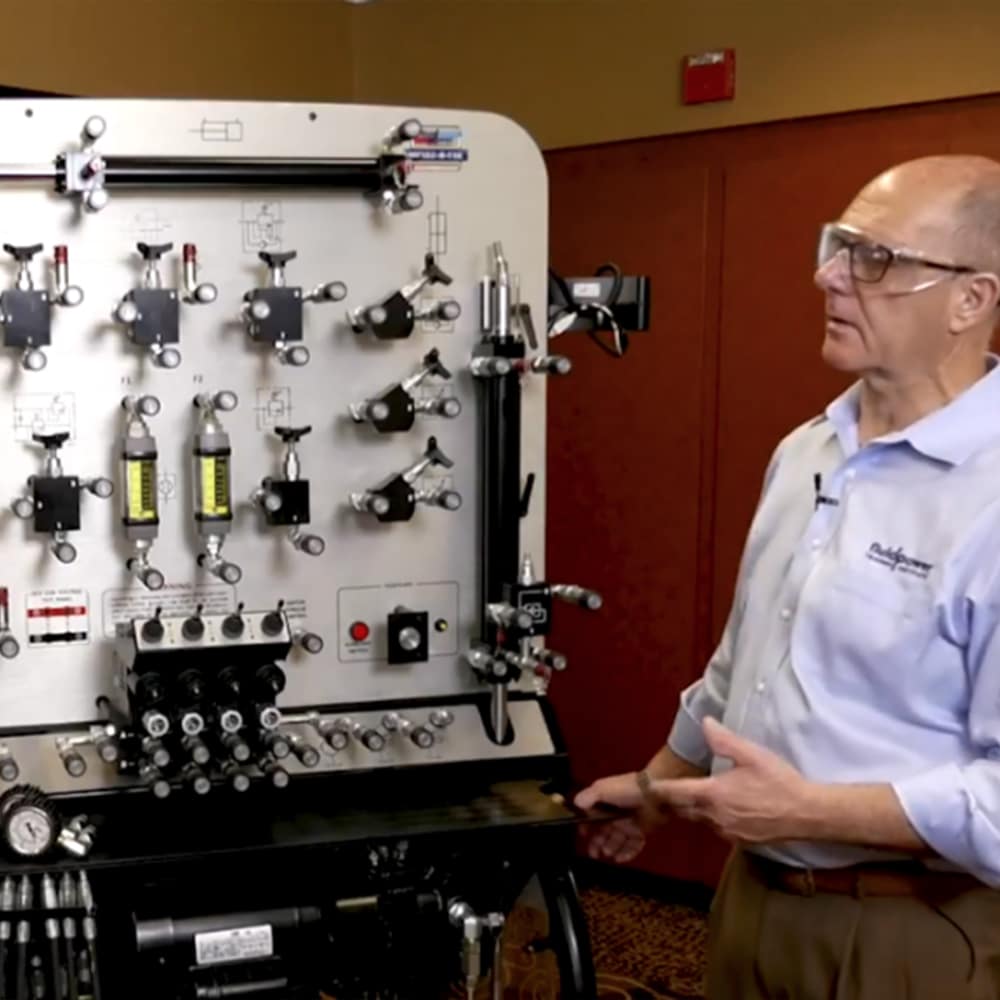
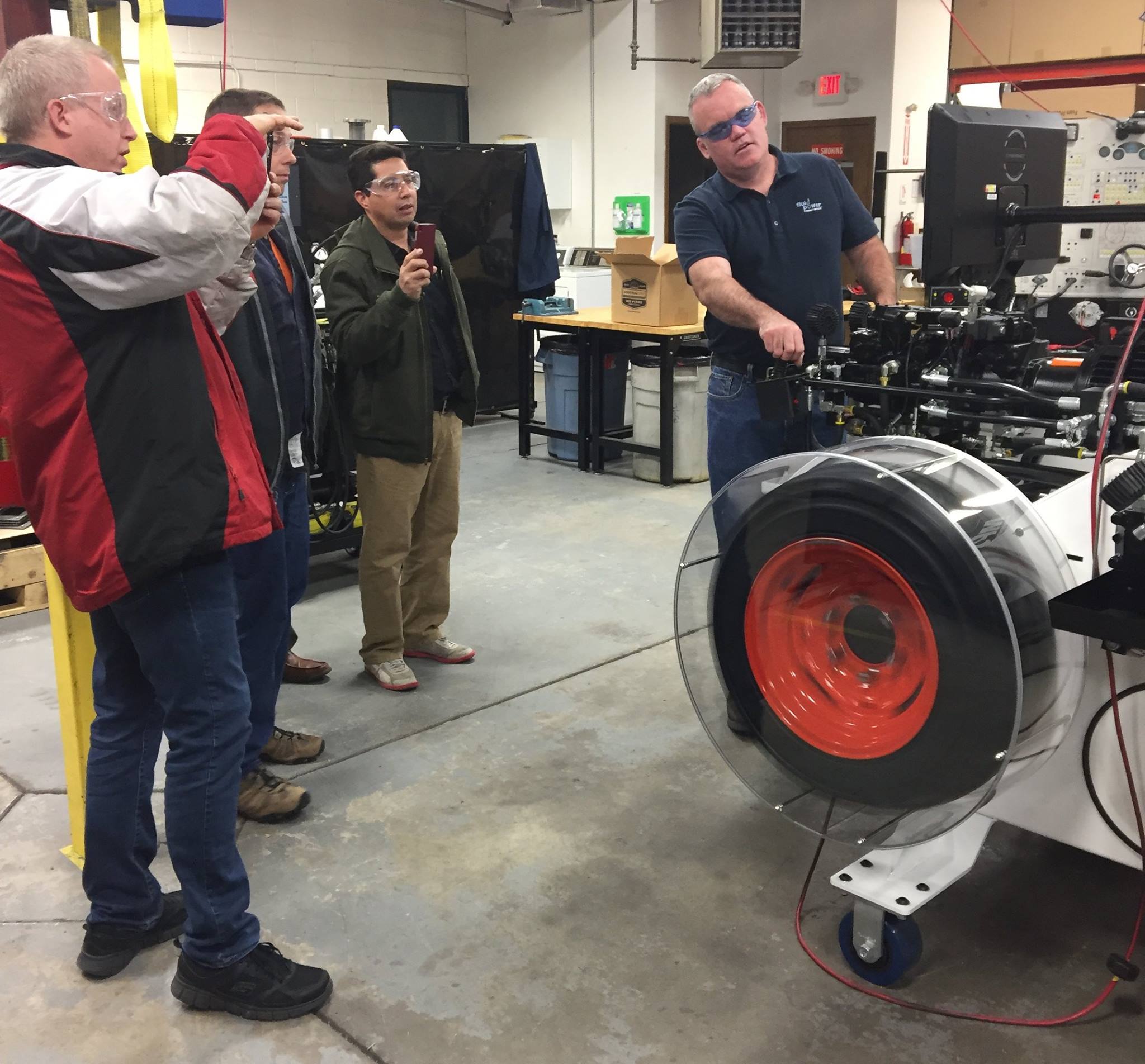
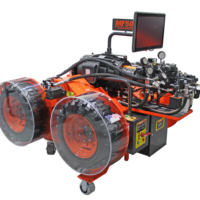
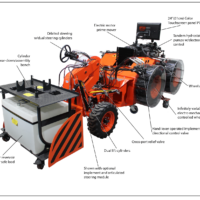
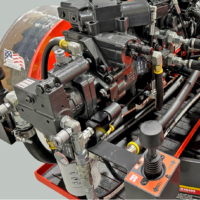
The MF500-HT-TSE Hydrostatic Transmission Training Simulator is the industry’s most advanced, safest, and instructionally powerful alternative to teaching hydrostatic drives using real skid-steer loaders. Designed specifically for education—not construction environments—it recreates the look, feel, and function of a skid-steer hydrostatic transmission without the hazards of moving machinery, exhaust, confined spaces, or unpredictable equipment motion. Students can drive the system under load in real time, perform adjustments, practice diagnostics, and troubleshoot every major hydrostatic failure mode published in manufacturer flowcharts.
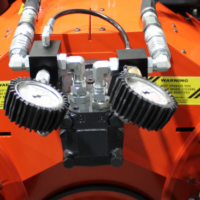
With dual tandem-mount axial piston pumps, electronic displacement controls, independent wheel-load systems, and a 24″ touchscreen PC loaded with diagnostic activities, the MF500-HT-TSE gives instructors full control over operating conditions and fault scenarios. This setup prepares technicians for the exact challenges they’ll encounter in the field—startup checks, pressure adjustments, null adjustments, case pressure verification, and troubleshooting performance issues—while ensuring the highest levels of safety, accessibility, and team-based learning.
MF500-HT-TSE — Key Features & Benefits
Teaching & Learning in Real Time
Students learn on a fully functional hydrostatic transmission they can drive, load, adjust, and troubleshoot safely inside a classroom. This bridges the gap between simulated learning and real-world hands-on practice.
The Safest Hydrostatic Training Simulator Available
No wheels on the ground, no rotating tracks, no hot engines, no hazardous exhaust, no confined spaces, no fatigue-inducing crouched work positions, and all moving components are guarded by heavy-duty Lexan® enclosures.
Unmatched Diagnostic Capability
Faults like worn pumps, worn motors, electronic failures, unidirectional operation issues, sluggish response, and overheating can be automatically introduced for real-time troubleshooting—something impossible to simulate consistently with actual vehicles.
Transforms Students Into Industry-Ready Technicians
Students master critical skills including pump/motor installation, pre-start checks, relief valve setup, null adjustments, case pressure checks, displacement control adjustments, and complete hydrostatic troubleshooting workflows.
Extremely Versatile & Configurable
Trainers can teach any make or type of hydrostatic transmission. Pumps and motors can be swapped or chosen at purchase, including high-speed and low-speed motor configurations.
Built-In Safe-T-Bleed® System
An FPTI™ exclusive enabling safe lockout, verification, and zero-energy state procedures—without discharging high-pressure oil into the atmosphere.
Optional Implement & Articulated Steering Module (MF500-IS-TSE)
Transforms the system into a fully functional front-end loader with articulated steering and cylinder service capabilities—without introducing the hazards associated with real equipment.
MF500-HT-TSE —Specifications
Prime Mover
- 25 HP (15 kW) electric motor
- TEFC, C-face
- 1800 RPM
- 3-phase 460V (optional 230V)
Hydrostatic Pump System
- Dual tandem-mount axial piston pumps
- 10 GPM (38 L/min) each
- 2000 PSI (138 bar)
- Electronic displacement control
Drive Motors & Wheel-Load System
- Dual high-torque, low-speed drive motors
- Fixed displacement: 5.0 in³/rev (82 cm³/rev)
- Independent left/right electronically controlled wheel load
- Simulates uphill, downhill, level, and runaway conditions
Instrumentation & Controls
- 24″ (61 cm) full-color touchscreen PC
- Microsoft Windows–based control & diagnostics software
- Pre-loaded troubleshooting activities covering every major OEM-published hydrostatic failure mode
Diagnostics & Fault Insertion
- Automatic fault introduction (worn components, electronic faults, unidirectional failures, sluggish operation, overheating, etc.)
- Real-time pressure, flow, displacement, and performance evaluations
Safety Systems
- Transparent Lexan® wheel covers
- Safe-T-Bleed® zero-energy verification system
- Two emergency stop stations
- Redundant electrical lockout
- Drip-tray oil recirculating system
- Flat-face zero-leak connections
- Multi-lingual warning & caution decals
Reservoir & Hydraulics
- 110-gallon (416 L) reservoir
- Self-draining oil management
- Load-holding valves throughout
Dimensions & Shipping
- Footprint approx.: 82″ W × 69″ H × 47″ D (from drawings)
- Unit weight: 2,200 lbs (998 kg)
- Shipping weight: 3,300 lbs (1,497 kg)
- Shipping size: 85″ T × 82″ W × 90″ L
Electrical Requirements
208/230 VAC:
- 100-amp dedicated circuit
- 4-conductor 4-gauge cable, 50 ft max
460 VAC:
- 40-amp dedicated circuit
- 4-conductor 8-gauge cable, 50 ft max
Options
- Pumps: Sauer-Danfoss®, Rexroth®, Eaton®, Linde®, etc.
- Pump controls: mechanical or hydraulic pilot
- Motors: high-speed/low-torque, variable displacement
- Implement & Steering Module (MF500-IS-TSE) with cylinders, steering valve, loader function, and diagnostic capability
MF500-HT — Curriculum Overview & Topics Covered
Curriculum Overview:
The MF500-HT curriculum teaches students how hydrostatic drive systems operate, respond to load, and fail under real-world conditions. Through structured labs, learners analyze pump and motor behavior, evaluate charge pressure requirements, observe displacement changes, and measure system response across a variety of simulated conditions. Diagnostic activities guide students through interpreting pressure signatures, identifying performance losses, and confirming the root cause of hydrostatic drive issues. The curriculum blends schematic interpretation, guided experimentation, and fault-based analysis to prepare students for maintaining and troubleshooting mobile hydrostatic equipment.
Topics Covered:
- Hydrostatic transmission theory and closed-loop operation
- Pump and motor displacement control
- Charge pressure flow paths and diagnostics
- Loop pressure fluctuation and load response
- Identifying cavitation and loop instability
- Diagnosing pump wear and inefficiency
- Swashplate control and feedback behavior
- Reading hydrostatic schematics and test plans
- Fault isolation using structured diagnostic workflows