

Description
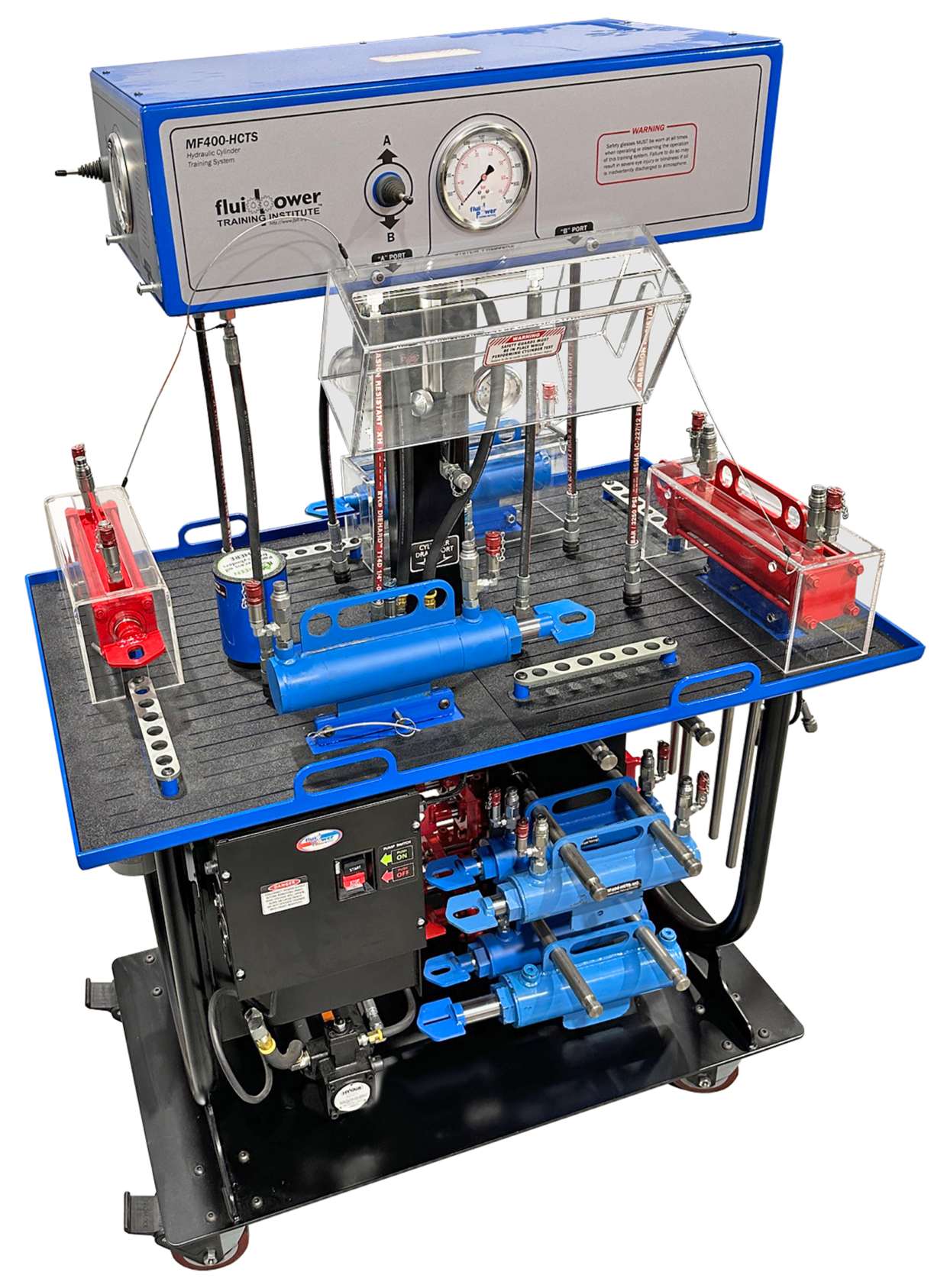
MF400-HCTS
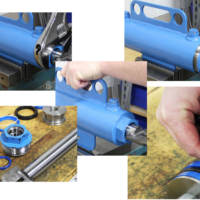
The MF400-HCTS Hydraulic Cylinder Training Simulator is a complete hands-on system designed to teach safe, industry-correct hydraulic cylinder service procedures. Students learn how to overhaul, inspect, reseal, test, and air-bleed hydraulic cylinders using real components, specialized fixtures, and clear safety covers, all mounted on a rugged, mobile four-station platform. This simulator eliminates the risks normally associated with live hydraulic service while giving learners the exact skills technicians need in real industrial, mobile equipment, and maintenance environments.
Purpose-built for workforce development, technical colleges, and maintenance training facilities, the MF400-HCTS ensures students gain the proven techniques used by professional cylinder overhaul specialists. The system teaches root-cause analysis, proper disassembly and assembly, safety-critical tool use, and real-time failure inspection, all within an efficient, classroom-friendly footprint.
MF400-HCTS — Key Features & Benefits
Teaches Complete Hydraulic Cylinder Overhaul Workflow
Students learn every essential task: preparation, safe disassembly, inspection, seal replacement, reassembly, testing, and air bleeding.
Industry-Standard Safety and Best Practices
Designed by cylinder overhaul specialists, the simulator supports safe workflow habits, correct tool usage, and error-free learning, without the liability risks that come with real machinery.
Four-Station Mobile Training Platform
Ideal for group instruction, demonstrations, and lab rotation. Includes welded steel fixtures, locking cradles, and clear acrylic safety shields at every station to protect students from oil spray during testing.
Real-Time Failure Analysis Training
The system teaches how to identify the most common causes of hydraulic cylinder failure, exactly the skill set employers demand.
Boosts Employability & Technician Productivity
Graduates gain high-value technical skills that reduce downtime, prevent equipment damage, and increase workplace safety.
Expandable with Real Cylinder Types & Seal Kits
Supports round-weld and tie-rod cylinders (MF400-RWC & MF400-TRC). Dedicated seal kits available (MF400-SK).
MF400-HCTS — Specifications
Training Capabilities
- Complete cylinder overhaul procedure
- Component inspection & failure analysis
- Piston and rod seal replacement
- Assembly and torque sequencing
- Cylinder testing & pressure verification
- Air-bleeding procedures
Hands-On Activities
- Safe preparation & securing of cylinders
- Tool selection and correct usage
- Disassembly and component extraction
- Tube honing assessment
- Correct seal installation
- Final test procedures
Training Module & Structure
- Four-station mobile module with swivel-lock casters
- Steel & aluminum construction with powder-coat finish
- Welded anchors and cradles with mechanical locks
- Clear acrylic safety covers on each station
- Storage capacity for up to 18 cylinders
Supported Cylinder Types
- Round-welded hydraulic cylinders (MF400-RWC)
- Tie-rod hydraulic cylinders (MF400-TRC)
- Seal kits: MF400-SK (fits both types)
Safety & Ergonomics
- Cylinders anchored to prevent barrel rotation
- Rod secured against rotation during piston removal
- Fixtures prevent accidental cylinder falls or student injury
- Acrylic shields prevent oil spray during misassembly tests
Electrical Requirements
- 110 VAC, 20-amp dedicated circuit
- 12-gauge extension cord max 50 ft, if used
Dimensions & Shipping
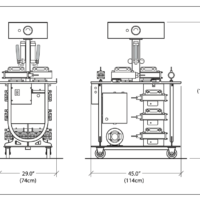
- Dimensions: 29″ W × 45″ D × 69″ H (Page 3 diagram)
- Shipping weight: 825 lbs (374 kg)
- Shipping size: 84″ × 54″ × 42″
MF400-HCTS — Curriculum Overview & Topics Covered
Overview:
The MF400-HCTS curriculum teaches closed-loop hydrostatic transmission behavior and diagnostics through structured testing and real-world fault simulations. Students learn to analyze loop pressure dynamics, displacement changes, and load interactions.
Topics Covered:
- Hydrostatic drive theory
- Loop pressure analysis
- Charge pump operation
- Cavitation & loop instability
- Over-center load behavior
- Pump/motor displacement control
- Transmission troubleshooting